

Keine Produkte im Einkaufswagen.


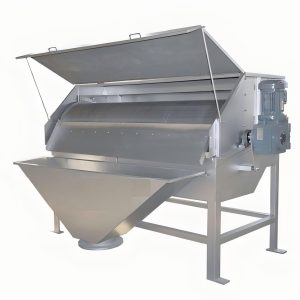
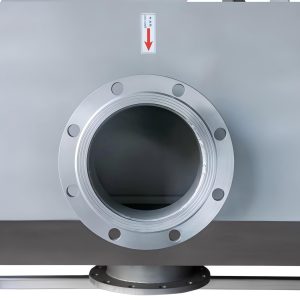
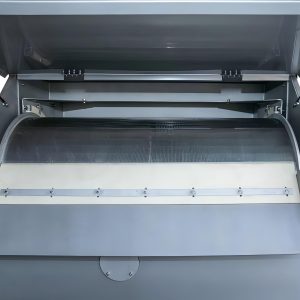
Hersteller von Trommelfiltern | Rotationssieb mit interner Zufuhr
Tired of clogged screens and manual cleaning in your wastewater pretreatment? This Kopay Rotary Drum Filter offers a fully automated, continuous-flow solution for efficient solid-liquid separation. Designed to handle a wide range of suspended solids from fine particles to fibrous materials, it significantly reduces downstream treatment load and operational hassle, ensuring a smoother and more cost-effective process for industries like aquaculture, food & beverage, and pulp & paper.
Introduction | Description of ROTARY DRUM FILTER:
Der rotary drum filter is an efficient and reliable solution tailored for small to medium-sized cities as well as industrial wastewater treatment plants. This advanced filtration equipment is specifically engineered to continuously screen and remove suspended solids from water, offering a highly effective pretreatment option.
Key Features of our Rotary Drum Filter:
Simplified Design with High Reliability
Compact and Space-Efficient
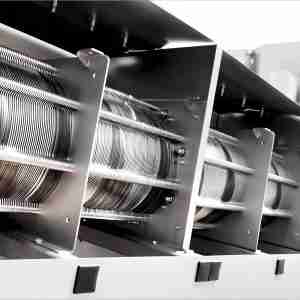
Wedge Wire Mesh Construction
Advanced Micro-Screening with Rotary Drum Filters
Der Kopay Rotary Drum Filter (also known as an internal feed rotary screen) is designed for the high-efficiency removal of fine suspended solids from wastewater. It is an ideal solution for industries where traditional bar screens are too coarse. By utilizing a rotating drum with a precision-woven wedge wire or perforated mesh, it captures solids and discharges them automatically, ensuring a clean effluent.
Internal Feed vs. External Feed: The Kopay Advantage
Our Rotary Drum Filters utilize an internal feed design, which is superior for handling high-volume flow and high solid loads. The wastewater enters the inside of the drum; the water passes through the filter media while the solids are trapped inside and moved to the discharge point by the internal screw flights.
Key Technical Advantages
Precision Filtration: Available with filter apertures from 20 microns to 3mm, allowing for targeted removal of specific particles.
Self-Cleaning Backwash System: Integrated high-pressure spray nozzles automatically clean the filter mesh during rotation, preventing clogging and ensuring constant flow.
Kompakt und geschlossen: The fully enclosed design prevents odors and splashing, making it suitable for indoor installations and sensitive environments.
Low Operating Cost: The drum rotates at very low speeds (usually 3-8 RPM), resulting in minimal power consumption and very low mechanical wear.
Corrosion Resistance: Standard construction in SUS304 Stainless Steel, with SUS316L options for highly corrosive or saline wastewater (e.g., aquaculture).
—How It Works for You: Simplicity and Reliability
Wastewater enters the rotating drum internally. As it passes through our precisely welded 304/316 stainless steel wedge-wire screen panels, solids are retained on the inner surface. The self-cleaning mechanism – utilizing efficient spray nozzles – removes debris automatically, discharging it into a collection hopper. This robust design eliminates manual cleaning, minimizes downtime, and guarantees consistent flow rates even with high-solid loads…
—Tailored for Your Industry’s Challenges
Aquaculture & Fisheries: Effectively removes uneaten feed and fecal solids from recirculating systems, maintaining optimal water quality and promoting healthier stock.
Lebensmittel- und Getränkeverarbeitung: Ideal for intercepting organic particles, peels, and pomace, reducing BOD/COD load and protecting sensitive downstream equipment.
Pulp & Paper Industry: Recovers fine fibers from whitewater, enabling material reuse and lowering fresh water consumption.
Industrial Pretreatment: A reliable first step for various industrial effluents, preventing clogs in pumps, pipes, and subsequent treatment units.
—Design Sketches for Rotary Drum Filter:

1= Water Storage Chamber 2= Frame 3=Rotary Drum 4=Sludge Discharge Plate 5=Inspection Door
6=Reducer Motor Or Gear Reducer Motor 7=Backwash Water Inlet
—Selecting the Right Model: Focus on Your Key Parameters
Choosing the optimal Rotary Drum Filter depends primarily on your average daily flow rate (m³/h) and the nature of the suspended solids. Below are our standard specifications. Customization in screen mesh size, drum diameter, and construction material (SS304, SS316L) is available to meet your exact site conditions.
—Techinical Data Sheet of Rotary Drum Filter:
| Screen gap(mm) | 0.25 | 0.5 | 0.75 | 1 | 1.5 | 2.5 | Drum Diam(mm) | Drum Length(mm) | Power (KW) | |||||||||||
| Modell | Capacity(m3/h) | |||||||||||||||||||
| KPRDF350x600 | 8 | 15 | 20 | 25 | 32 | 42 | 350 | 600 | 0.25 | |||||||||||
| KPRDF610x610 | 33 | 60 | 81 | 100 | 130 | 170 | 610 | 610 | 0.55 | |||||||||||
| KPRDF610x1220 | 65 | 120 | 162 | 200 | 260 | 340 | 610 | 1220 | 0.75 | |||||||||||
| KPRDF610x1830 | 100 | 180 | 243 | 306 | 397 | 520 | 610 | 1830 | 0.75 | |||||||||||
| KPRDF800x1830 | 175 | 315 | 436 | 535 | 695 | 912 | 800 | 1830 | 1.1 | |||||||||||
| Modell | Inlet | Outlet | Washing | A | C | D | E | F | G | K | L | S | U | |||||||
| KPRDF350x600 | DN100 | DN150 | DN15 | 1195 | 600 | 880 | 1100 | 620 | 600 | 540 | 760 | 765 | 550 | |||||||
| KPRDF610x610 | DN150 | DN200 | DN15 | 1290 | 610 | 1385 | 1595 | 950 | 1000 | 830 | 1085 | 780 | 945 | |||||||
| KPRDF610x1220 | DN200 | DN250 | DN20 | 1940 | 1220 | 1385 | 1595 | 950 | 1000 | 830 | 1085 | 1360 | 945 | |||||||
| KPRDF610x1830 | DN250 | DN300 | DN25 | 2585 | 1830 | 1385 | 1595 | 950 | 1000 | 830 | 1085 | 1970 | 945 | |||||||
| KPRDF800x1830 | DN300 | DN350 | DN25 | 2620 | 1830 | 1450 | 1985 | 1200 | 1205 | 1040 | 1380 | 2000 | 1160 | |||||||
—Frequently Asked Questions (FAQs)
Q: What’s the main difference between a rotary drum filter and a static screen?
A: Our rotary drum filter provides continuous, automated operation with self-cleaning, handling higher and more variable solid loads without manual intervention, whereas static screens require periodic cleaning and are prone to clogging.Q: How do I determine the correct screen aperture size?
A: The aperture depends on the size of solids you need to remove. We recommend sending us a water sample for analysis. As a general guide, 0.5mm-1mm is common for fine organics, while 1mm-3mm is used for larger particles.Q: What is the typical maintenance required?
A: Maintenance is minimal. Key tasks include routine inspection of spray nozzles for clogging and periodic bearing lubrication. Our design allows for easy access to all critical components.
Success Case: Saving $2,000/Month in Fiber Recovery
Die Herausforderung: A paper recycling mill was losing a significant amount of short fibers in their wastewater, which was also clogging their downstream DAF system. They needed a way to recover these fibers and reduce the load on their treatment plant.
Unsere Lösung: Kopay International installed a KRF-900 Rotary Drum Filter with a 60-micron stainless steel mesh.
Die Ergebnisse:
Resource Recovery: The plant now recovers approximately 200kg of usable fiber every day.
DAF Efficiency: By removing the fine fibers at the primary stage, the downstream DAF system’s chemical consumption was reduced by 15%.
ROI: Between fiber recovery and chemical savings, the equipment paid for itself in just 8 months.
Industry Applications
Aquaculture (Fish Farming): Removing fish waste and uneaten feed to maintain water quality.
Pulp & Paper: Fiber recovery and “white water” filtration.
Textilien & Färben: Removing lint and fine fibers before chemical treatment.
Slaughterhouses: Removing fine hair and fat particles.
Municipal Sewage: Fine screening before MBR (Membrane Bioreactor) systems.
—Proven Performance in Real Applications
Our Rotary Drum Filters are trusted by clients worldwide to solve challenging screening problems.
For instance, we helped a seafood processing plant in Brazil reduce their pretreatment maintenance time by 70% after installing a customized drum filter with a 0.75mm screen.
Explore Related Solutions: [Link to your “Aquaculture Wastewater Treatment” screw sludge dewatering press]
See Our Full Product Range: [Link to your “Screening Equipment” category page]
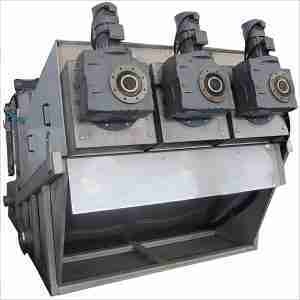
A rotary drum filter is suitable for continuous, high-throughput scenarios. However, for factories with intermittent production and fluctuating sludge volumes, the flexibility and compact design of a screw sludge dewatering press may be a better choice
 English
  Português
  Italiano
  Nederlands
  Dansk
Dansk  Svenska
  हिन्दी
  Русский
  עִבְרִית
  日本語
日本語  한국어
한국어
Rezensionen
Es liegen noch keine Bewertungen vor.